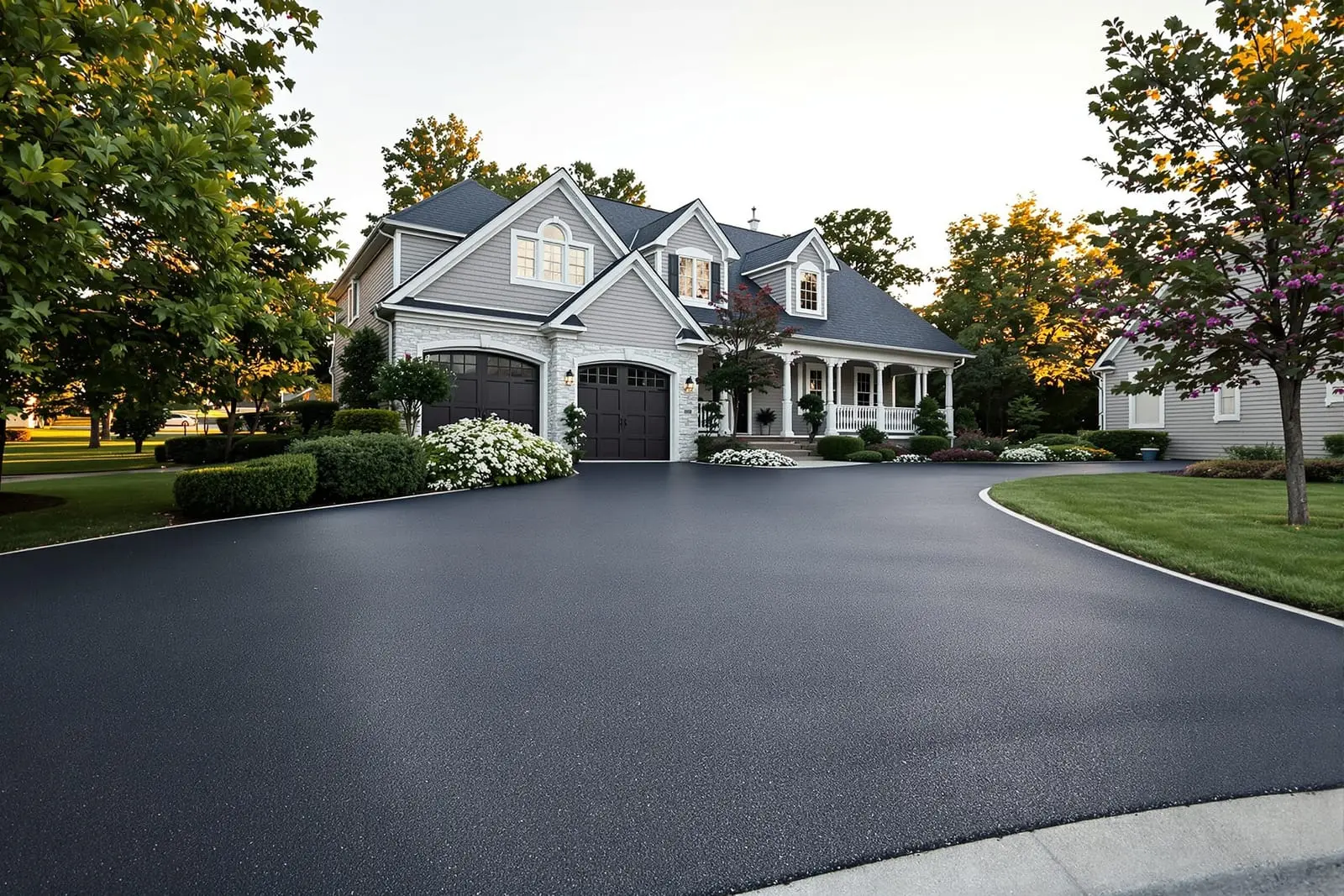
Get a smooth, long lasting asphalt driveway installation in New Orleans, LA that boosts curb appeal and stands up to local weather. Our team handles grading, base prep, and paving for new asphalt driveways and driveway paving installation. We design residential driveways to support daily traffic and provide clean transitions to streets and garages.
Prestige Asphalt New Orleans provides professional asphalt driveway installation throughout New Orleans, LA and the surrounding area. Our licensed, insured crew delivers safe, clean, on-time work with a free estimate before anything begins. Call (504) 386-5171 or request your free quote.
Asphalt driveway installation for New Orleans homes
If you are looking at the cracked concrete or gravel in front of your house and wishing it looked cleaner and easier to maintain, Prestige Asphalt New Orleans can help with a proper asphalt driveway installation. We work all over the city, from older homes in Gentilly and Mid-City to newer builds in New Orleans East and the West Bank, and we tailor each driveway to the age of the house, the soil conditions, and how you actually use the space.
Instead of a one-size-fits-all approach, we start by asking how many vehicles you park, whether you drive in with a boat or trailer, and if you need room for kids to play or guests to turn around. That information affects the driveway layout, thickness, and the mix we recommend. For example, a narrow Uptown lot with alley access needs a different plan than a wide Lakeview front yard that doubles as extra parking during Saints season.
Our goal is to install an asphalt driveway that looks sharp from the street, drains correctly when the New Orleans rain hits, and stands up to heat, humidity, and subsidence. We explain each step, from the first cut of your old driveway to the last roll of the compactor, so you know what you are paying for and what to expect during the project.
What actually happens during an asphalt driveway installation
A quality asphalt driveway in New Orleans starts below the surface. First, we remove existing material, which might be broken concrete, a patchwork of asphalt repairs, or just compacted shell or gravel. We haul this off so you are not stuck with piles of debris. On older properties in areas like the Lower Garden District, we take extra care around tree roots and any shallow utilities that may have shifted over time.
Next we address the subgrade, the native soil your driveway rests on. Much of New Orleans has soft, moisture-sensitive soils. We proof-roll the area with equipment to identify soft spots, then undercut and replace those sections with better structural material when needed. This step is crucial for preventing early rutting and dips. In low-lying or flood-prone areas, we often raise the driveway slightly and improve drainage grading to keep standing water off the surface.
After the subgrade is stable, we install a crushed stone base, typically 4 to 8 inches deep depending on vehicle loads and soil conditions. We use graded limestone or similar aggregate that compacts tightly and allows water to move through. The base is leveled and compacted in layers so it acts like a solid platform. For heavier use driveways, like small business owners who park work trucks at home, we may recommend a thicker base section.
Then we place the hot mix asphalt. For most residential driveways we install 2.5 to 3 inches of compacted asphalt in one or two lifts, using a paving machine when access allows for the smoothest surface. In tighter spaces, we hand-place and carefully rake the mix before rolling it. We shape the asphalt with the correct crown or cross-slope so stormwater flows to the street, ditch, or a drain channel instead of pooling. Finally, we compact the asphalt with steel drum and pneumatic rollers to lock the mix together and achieve a consistent finish without loose rock or roller marks.
To finish the job, we cut clean edges at sidewalks and curb transitions and hand-tamp around borders. We rope or cone off the driveway so no one drives on it too early. Most New Orleans homeowners can walk on their new asphalt within a few hours, but we typically recommend waiting 24 to 48 hours before driving on it, especially in hot weather when the surface is softer.
Design options, thickness choices, and looks that fit your property
Asphalt driveway installation is not all black and boring. You have choices in layout, thickness, and finishing details that affect both appearance and performance. At Prestige Asphalt New Orleans, we usually start with driveway width. Standard single-car residential driveways often range from 9 to 11 feet wide, while two-car setups are typically 18 to 20 feet. On tight New Orleans lots, we may flare the driveway near the street to ease turning in, then narrow it along the side of the house.
Thickness is another important design decision. For small sedans and light use, a 2.5 inch compacted surface on a solid base can be enough. If you routinely park trucks, SUVs, or service vehicles, 3 inches or more of asphalt with a thicker base resists rutting and pushing in our summer heat. For homeowners who keep boats or RVs on the driveway, we may suggest a reinforced base section only under the heaviest wheel paths to balance cost and durability.
You can also choose edge treatments and transitions. We can match the height of your driveway to older New Orleans sidewalks, step up to a raised porch area, or create gentle slopes into carports and detached garages so you do not bottom out. We often add clean, straight saw-cut edges where the new asphalt meets existing concrete, like at a garage slab, so it looks intentional rather than patched.
For curb appeal, some customers add a small concrete apron at the street, or border the asphalt with brick or pavers along gardens and walkways. While asphalt itself is black to charcoal gray, the way we compact and finish it can create a tighter, smoother look or a slightly more textured surface that can provide better traction near slopes. We review which option makes sense for your property and your budget, and we explain how each choice affects long-term maintenance.
If you are in an historic neighborhood, we pay attention to the scale and lines of the house. A large, overly wide driveway in front of a classic New Orleans shotgun can look out of place, so we may recommend a narrower drive with a small parking pad off to the side to keep the front yard balanced.
Costs, what drives the price, and how we quote your driveway
New Orleans homeowners often ask, "What does an asphalt driveway installation cost per square foot?" The reality is that the range can be wide, and a driveway on solid, higher ground in Lakeview is not priced the same as one over soft, frequently wet soil in parts of Gentilly or New Orleans East. Prestige Asphalt New Orleans walks you through the main cost drivers so you understand where your money is going.
The first major factor is size and layout. Straight, open driveways that we can reach easily with machinery cost less per square foot than long, winding, or very tight access drives that require extra hand work and small equipment. If we need to remove thick, reinforced concrete or numerous failed asphalt patches, demolition and disposal add to the total.
Subgrade correction and base thickness are often the biggest variables in this region. If we can reuse and compact your existing base with only minor repairs, your project will be more economical. If we find deep soft spots, old organics, or washout areas, we need to excavate and replace those sections with new aggregate and sometimes geotextile fabric. That extra structural work prevents future problems like settling and alligator cracking, but it does affect the bottom line.
Asphalt thickness and mix type also impact price. A heavier-duty driveway that supports multiple vehicles or work trucks needs more material and compaction time. In some situations we may recommend a binder course plus a surface course, essentially two asphalt layers, for added strength and smoother finish. Access timing can matter as well. If a driveway must be completed in a tight window between tenant moves or around other construction, additional crew coordination can influence cost.
Our quoting process is straightforward. We visit your property, measure the area, inspect the soil and existing driveway, note drainage patterns, and ask about how you use the space. Then we provide a written proposal that clearly lists what is included: base preparation, asphalt thickness, any drainage work like small swales or tie-ins to existing drains, and cleanup. If there are optional upgrades, such as thicker sections under heavy vehicles or decorative edges, we list them separately so you can decide what fits your budget.
New Orleans specific issues: water, heat, and long term care
New Orleans presents some unique challenges for asphalt driveway installation. High groundwater, frequent heavy rains, and hot summers all affect how a driveway should be built and maintained. Prestige Asphalt New Orleans focuses on drainage first. We check how water currently moves across your yard, sidewalk, and street during storms. If your current driveway holds water against the house or carport, we correct the slope or add mild contouring so the new asphalt sheds water away from structures.
Because many local homes sit near or below street level, we often incorporate subtle swales or small transitions so your driveway does not become a channel that forces water toward your front porch or garage. In some neighborhoods, the city or parish drainage inlets are a fixed height, so we design around those constraints instead of fighting them. Proper elevation planning during installation is far less expensive than dealing with moisture damage to foundations later.
Heat and humidity here also affect asphalt behavior. Fresh asphalt is more pliable in high temperatures, and heavy vehicles can mark a new surface if it is driven on too soon. We schedule paving and compaction with local weather in mind, and we will tell you exactly how long to wait before parking, especially during summer. Over the long term, regular sealing can help protect against UV damage and surface drying, although we usually recommend waiting at least 6 to 12 months before the first sealcoat so the driveway can cure.
You should also know some typical warning signs that your driveway needs attention. Standing water in specific spots, new spider or alligator cracking, or spots where the surface seems to push when you turn the steering wheel in place are clues that either drainage or base support needs adjustment. When we install a new driveway, we aim to prevent these issues with proper foundation work, but New Orleans soil movement can still create problems over many years.
We leave every customer with basic care instructions tailored to this climate: when to avoid sharp turning on hot days, how to keep edges stable by not driving off the sides into soft soil, and what kind of de-icing products (if any) are safe if we get the rare freeze. With the right installation and simple maintenance, a residential asphalt driveway in New Orleans can provide many years of solid service while looking clean and well kept.
“
Professional asphalt driveway installation, done right the first time, quality materials, honest pricing, and results that last.
Prestige Asphalt New Orleans
Asphalt Driveway Installation Across Our Service Area