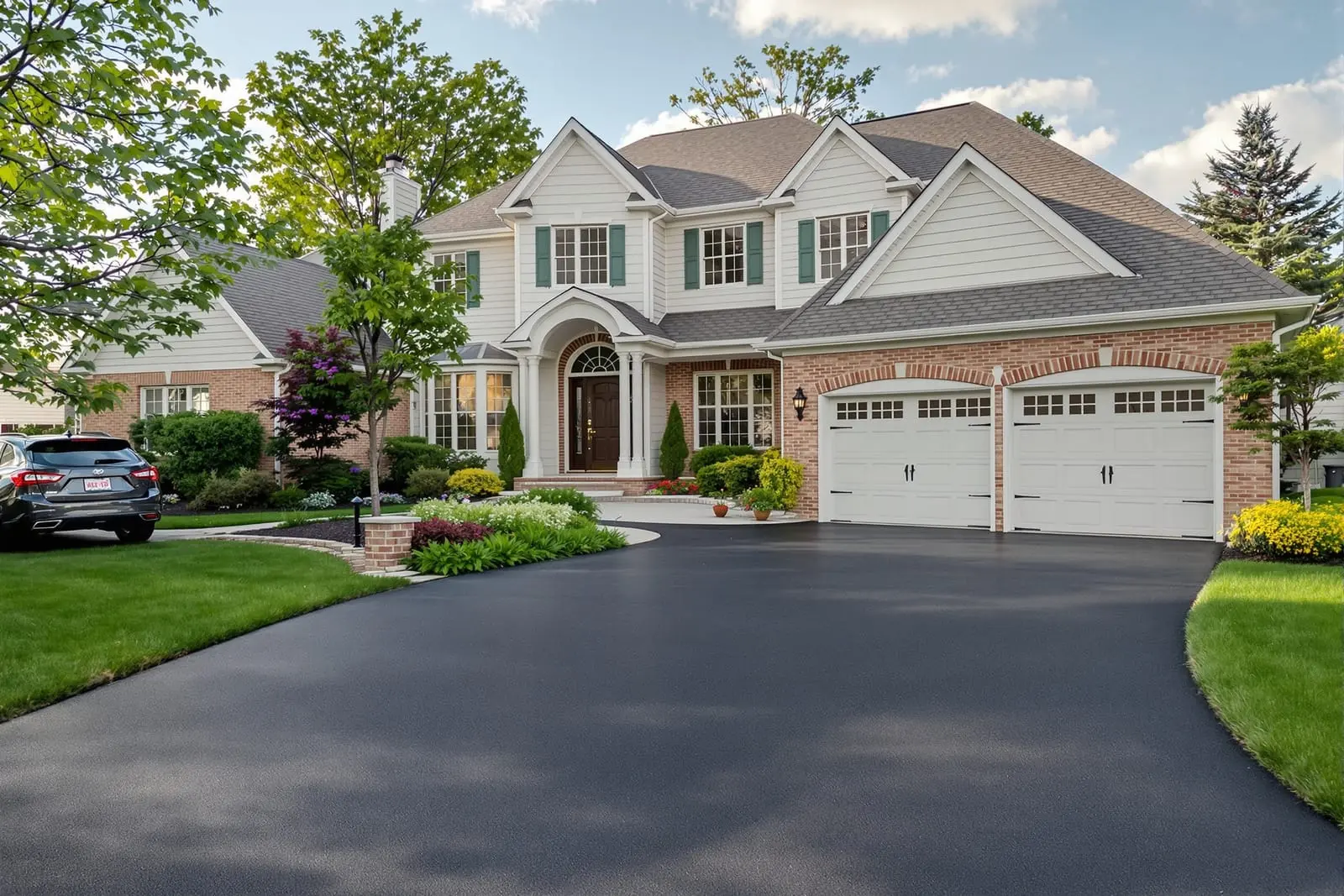
Protect your driveway with professional asphalt sealcoating in New Orleans, LA. We clean the surface, fill cracks, and apply an even coat of sealer that shields your asphalt from sun, rain, and vehicle fluids. Regular crack filling and sealcoating slows aging, improves appearance, and helps your residential driveway last longer with fewer costly repairs.
Prestige Asphalt New Orleans provides professional asphalt sealcoating throughout New Orleans, LA and the surrounding area. Our licensed, insured crew delivers safe, clean, on-time work with a free estimate before anything begins. Call (504) 386-5171 or request your free quote.
Asphalt sealcoating for New Orleans driveways, parking lots, and private roads
In New Orleans, sun, rain, and heat are rough on asphalt. Sealcoating puts a protective layer on top of your existing pavement so it lasts longer and looks better. Prestige Asphalt New Orleans focuses on sealing asphalt that is still structurally sound, then combining it with proper crack filling so water cannot work its way below the surface.
On this service, we start with an on-site look at your driveway, parking lot, or private road. We check for base failure, heavy rutting, or alligator cracking. Those are signs you may need deeper repairs or new paving instead of just a sealcoat. If the asphalt is generally solid with normal surface wear, sealcoating and crack filling is usually the right move.
For local conditions, sealcoating in New Orleans works best in drier, warmer weather. Here, that usually means late spring through early fall, avoiding weeks with a high chance of afternoon storms. We schedule your work for a time when the surface can stay dry for at least 24 hours after we finish. That gives the material time to cure properly so it holds up through our Gulf Coast heat and rain.
The goal is simple: slow down aging, stop water from getting into cracks, and keep oil and sunlight from eating away at the asphalt. Done on a regular cycle, sealcoating in our climate can often stretch the life of pavement by several years.
How Prestige Asphalt New Orleans does sealcoating step by step
Every sealcoating job starts with surface prep. We use power blowers, wire brooms, and sometimes pressure washing to remove loose gravel, leaves, dirt, and old flaking sealer. In parking lots, we often treat old oil spots with a primer so the new sealer can grab onto the surface instead of peeling away. If prep is rushed, the sealer will not bond correctly and you will see bald or peeling spots within a year.
Next we handle cracks before any sealer goes down. Hairline cracks may only need the sealer itself. Anything wider than about a quarter inch should be filled with a hot or cold pour crack filler, depending on the size and location. We clean each crack with blown air and a wire brush, then apply the filler slightly above the surface so it can settle as it cools. This helps seal out water that would otherwise soak the base every time it rains.
After cracks are taken care of, we edge off landscaping and structures. We hand brush sealer along curbs, garage doors, building edges, and around drains. This keeps sealer off bricks, siding, and grass, and creates a clean line instead of a messy edge.
Then we apply the main coat of sealer, usually with a mix of squeegee and spray application. Squeegee application helps work material into small surface voids, while spraying gives a more uniform finish in open areas. For heavier traffic areas like commercial parking lots, we usually recommend two coats, allowing the first to dry before applying the second. Residential driveways often work well with one generous coat if traffic is light.
Once the sealer is down, we cone or tape off the area. Cure times vary with humidity and temperature, but in New Orleans most driveways can be walked on after about 24 hours and driven on after 36 to 48 hours. Commercial lots that take delivery trucks may need a longer cure window before full traffic returns.
Crack filling that stands up to New Orleans rain and heat
Crack filling is not just cosmetic. In our climate, water finds its way into every opening, and repeated soaking and drying weakens the base under your asphalt. Prestige Asphalt New Orleans focuses heavily on crack work before any sealcoating, because skipping this step almost always shortens the life of the job.
We break cracks into three general groups. Narrow surface cracks, usually under one quarter inch, are mostly handled by the sealer itself. Medium cracks are wide enough to take in water and debris, so we clean them deeply with air and mechanical tools, then use a pourable crack filler that stays flexible. Larger cracks or joints may need routing, meaning we shape the top of the crack into a uniform channel, then fill it with a rubberized material designed to expand and contract with New Orleans temperature swings.
On older lots with alligator cracking (a pattern that looks like fish scales), we are straightforward with customers. Crack filling and sealcoating alone will not fix that kind of damage for long. In those zones, we usually recommend cutting out and patching the failed section, then sealing the entire area once solid repairs are in place. That way you are not paying for a sealcoat that will soon crack right back open.
We are also careful about timing. Crack fillers need dry conditions both inside the crack and on the surface. If rain is likely, we will reschedule rather than risk trapping moisture. This matters especially in New Orleans where short, heavy showers are common. Waiting an extra day is cheaper than redoing a failed crack repair.
Once cracks are filled and cured, the sealcoat ties everything together into one continuous surface. This combination is what really protects against water, plant growth in the cracks, and further unraveling of the edges.
What affects the cost of asphalt sealcoating in New Orleans
Several local factors drive the cost of asphalt sealcoating and crack filling, and it helps to understand them before you gather quotes.
Total square footage is the main driver. A small driveway in Gentilly will cost less than a large commercial lot in Metairie, even though the steps are similar. However, bigger jobs often benefit from economies of scale, so the price per square foot on a shopping center lot might be lower than a single-home driveway.
The condition of the existing asphalt is the next big factor. Light wear with a few normal cracks is straightforward. Pavement with heavy cracking, potholes, or base problems needs more crack filler, more edging, and often patching before we can even start sealing. That extra labor and material shows up in the estimate. At Prestige Asphalt New Orleans, we separate out patching, crack filling, and sealcoating lines on the proposal so you can see where your money is going.
Access and layout matter as well. A straight, open driveway that our crew and equipment can reach easily takes less time than a complex parking lot with islands, tight corners, and lots of hand cutting. If we have to stage work in sections to keep parts of a commercial lot open for business, the job can take more trips and more traffic control, which affects cost.
Timing also plays a role. Trying to sealcoat right in the middle of hurricane season is riskier, and we may need contingency days built into the plan. For busy commercial sites in New Orleans, you may choose night or weekend work to avoid disrupting customers, which can change pricing because of crew scheduling.
Finally, material choices affect cost. Premium sealer blends with additives for extra durability or faster cure times often cost more but can be a better value for high-traffic lots or gas stations that see frequent oil and fuel spills.
When to schedule sealcoating and how to prepare your property
In New Orleans, asphalt sealcoating is usually best scheduled from late March through October, as long as extended rain is not in the forecast. We look for daytime highs at or above the mid 60s and no soaking rain for at least 24 hours after application. Cooler winter days or very humid, overcast conditions can slow curing and affect how long the coating lasts.
Before our crew arrives, you can help by clearing the area of vehicles, trailers, and movable items like basketball goals, planters, and trash cans. If this is a commercial lot, we work with you to plan which sections will be closed and when, and we can provide cones and tape for redirecting traffic. For residential jobs, we usually ask that neighbors know about the project so they do not accidentally drive across the fresh sealer.
Prestige Asphalt New Orleans will handle surface cleaning, crack preparation, and edging. If there are sprinkler systems along the edges, we ask that you turn them off a day before and a day after the job so the pavement can stay dry. In shaded areas under large oaks or near buildings, drying can be slower, so we sometimes recommend a longer cure time before allowing heavy vehicles.
After sealcoating and crack filling are complete, plan for at least 24 hours of no foot or vehicle traffic, and up to 48 hours for driveways and standard commercial lots. For areas that get heavy trucks or delivery vehicles, 72 hours is safer, especially in cooler or more humid weather.
In terms of long term care, a good rule of thumb in New Orleans is to consider sealcoating every 2 to 4 years, depending on traffic and sun exposure. Lots that see constant turning and braking, like restaurant drive-thrus or school pick-up lanes, may benefit from a shorter cycle. Lightly used residential driveways in partial shade may be fine on the longer end of that range.
“
Professional asphalt sealcoating & crack filling, done right the first time, quality materials, honest pricing, and results that last.
Prestige Asphalt New Orleans
Asphalt Sealcoating & Crack Filling Across Our Service Area