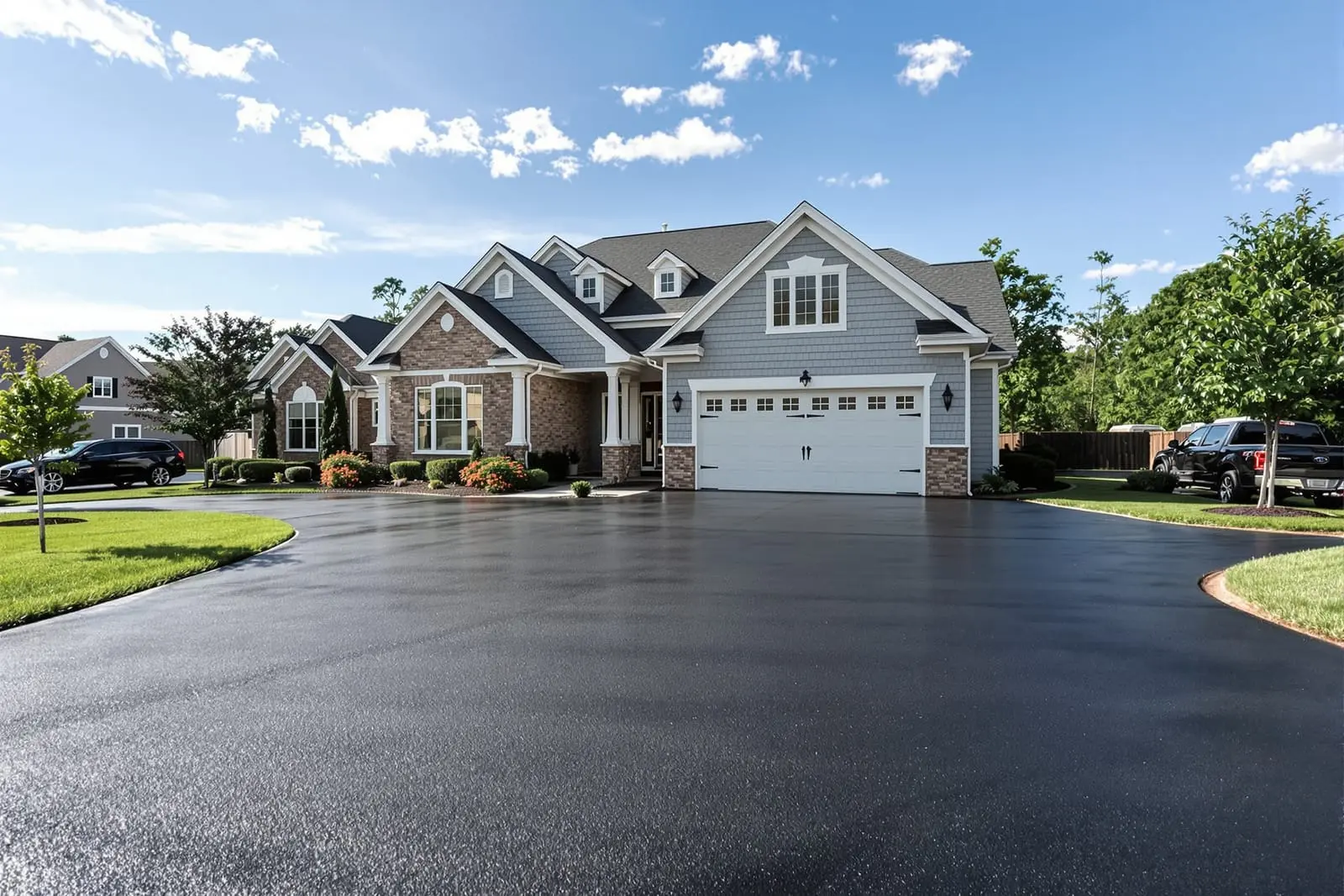
Refresh aging pavement with asphalt resurfacing in New Orleans, LA instead of a full replacement. We install driveway overlay and asphalt overlay systems that add a new wearing surface over a sound base. Our team repairs defects, profiles the old asphalt, and paves a smooth new lift that restores appearance and extends service life.
Prestige Asphalt New Orleans provides professional asphalt resurfacing throughout New Orleans, LA and the surrounding area. Our licensed, insured crew delivers safe, clean, on-time work with a free estimate before anything begins. Call (504) 386-5171 or request your free quote.
Asphalt Resurfacing in New Orleans: When Repair Is Better Than Replacement
Many New Orleans property owners are told they need full asphalt replacement when a targeted resurfacing would solve the problem at a lower cost. Asphalt resurfacing (also called an asphalt overlay) adds a new engineered layer on top of your existing pavement, restoring a smooth, black finish without tearing everything out.
Prestige Asphalt New Orleans focuses first on the condition of your base. If the underlying foundation is stable and drainage is workable, resurfacing is often the smartest option for driveways, small parking lots, private streets, and commercial loading areas. We inspect for subsurface movement, pumping (flexing under traffic), and water intrusion, then explain whether an overlay will truly last on your pavement in our climate.
In Orleans Parish and surrounding areas, we factor in local conditions you live with every day: intense sun that oxidizes asphalt, afternoon thunderstorms that expose drainage issues, and occasional flooding that can weaken base layers. Our recommendations for resurfacing versus full reconstruction are based on how your pavement will perform through several more Gulf Coast summers, not just how it looks this week.
Our Asphalt Resurfacing & Overlay Process Step by Step
Effective resurfacing is more than just putting a thin black layer on top. Prestige Asphalt New Orleans uses a detailed, field-tested process that keeps overlays bonded and looking good for years.
1. Site inspection and measurements
We walk the entire area, mark structural failures, check slopes toward drains or the street, and take depth readings at multiple locations. This lets us calculate overlay thickness, patch quantities, and whether milling is required at transitions like garage slabs, curbs, and sidewalks.
2. Structural patching
Areas with deep potholes, spiderweb alligator cracking, or sinking are cut out with a saw or cold planer, usually 2 to 6 inches deep depending on damage. We remove failed material, recompact the base, and install new hot mix asphalt in lifts, compacted with a plate compactor or small roller. This prevents old cracks from quickly reflecting through the new overlay.
3. Edge and transition prep
At gutters, catch basins, and building entrances, we may mill or grind the existing asphalt to keep final heights flush and ADA friendly. In many New Orleans neighborhoods with older concrete curbs and narrow streets, careful transition planning avoids trip hazards and standing water along the curb line.
4. Cleaning and bonding
All surfaces are power blown and broomed to remove dust and loose aggregate. We then apply a tack coat, a thin sprayed emulsion that binds the new asphalt to the existing surface. Skipping or underapplying tack is a common cause of delamination, so we adjust application rates for weather and surface texture.
5. Installing the overlay
We place hot mix asphalt using a paver or by machine-assisted hand work, depending on site access. Typical overlay thickness ranges from 1 to 2 inches for residential driveways and 1.5 to 3 inches for commercial lots, adjusted for traffic loads and existing grades. Our crew rakes and lutes the mat where needed to shape water flow toward drains.
6. Compaction and finishing
Steel drum and pneumatic rollers compact the new asphalt to specified densities. For smaller New Orleans driveways with tight turns, we use compact rollers that can reach close to fences, houses, and trees without marking the surface. Edges are hand finished for a clean, defined line.
7. Striping and markings
Commercial properties can be restriped within 24 hours in normal weather. We reestablish existing layouts or redesign traffic flow and ADA compliant parking if desired, following local code and fire lane requirements.
Choosing Overlay Thickness, Mix Types, and Surface Options
A quality asphalt resurfacing project is tailored to how your pavement is used. Prestige Asphalt New Orleans does not use a one thickness fits all approach, because a Gentilly driveway that sees sedans is very different from a warehouse lot near the Port that sees daily tractor trailers.
Overlay thickness: For New Orleans residential driveways and small parking areas, 1.25 to 1.5 inches of compacted new asphalt is commonly sufficient if the base is sound and patching has been done correctly. Busy commercial or multifamily lots may need 2 inches or more, especially in drive lanes and dumpster pads where vehicles turn sharply or sit loaded for long periods.
Asphalt mix design: We select hot mix formulations based on expected traffic, drainage, and shade. Finer mixes give a smoother look for homes and office entrances but can show scuffing if heavy trucks turn sharply. Coarser mixes handle turning and braking forces better in loading zones and alleys. For areas prone to standing water, we may specify a slightly coarser surface to maintain texture and reduce hydroplaning.
Surface texture and appearance: Most resurfacing uses standard black asphalt, but we can adjust finish techniques to favor smoother or more textured surfaces. Around Uptown and Lakeview homes with decorative concrete or brickwork, we focus on clean edges and uniform texture so the new asphalt matches the property aesthetic instead of looking like a patch job.
What Affects Asphalt Resurfacing Cost in New Orleans
Every property and pavement is different, so Prestige Asphalt New Orleans explains the specific cost drivers on your project before work begins. Typical factors that influence your asphalt resurfacing price include:
1. Square footage and layout
Larger, open areas cost less per square foot than small, cut up spaces. A simple driveway in New Orleans East with one entrance is more efficient than a complex courtyard with islands, gates, and tight turns in the French Quarter.
2. Amount of structural repair
The more base failures, alligator cracking, or deep potholes that must be cut out and patched, the higher the cost. If more than about 30 to 40 percent of the area needs structural repair, we may recommend partial or full reconstruction instead of overlaying, so you are not paying twice for a short term fix.
3. Milling and transition work
Grinding at garage slabs, curb lines, and tie-ins to city streets adds machine time but prevents height problems and ponding. On New Orleans streets that already sit low due to settlement, careful milling is often essential to avoid sending more water toward a building.
4. Thickness of new asphalt
More thickness means more material and more compaction passes. Heavier duty surfaces, such as commercial truck routes and restaurant parking lots, need more tonnage than light duty residential drives.
5. Site access and staging
Tight alleys, limited parking, overhead live oaks, and narrow one way streets can affect how we bring in trucks and equipment. In the older parts of New Orleans, we sometimes phase work or use smaller equipment so we can complete your resurfacing safely without disrupting neighbors or blocking critical access.
We review these variables in plain language and supply a written proposal that itemizes patching, overlay, and optional work like striping or drainage correction, so you understand where each dollar goes.
Common Overlay Problems and How We Prevent Them
Asphalt overlays can fail early if shortcuts are taken. Prestige Asphalt New Orleans is very direct about what can go wrong and how we prevent those issues on your property.
Reflective cracking: If structural cracks are left unaddressed under the new layer, they often show back through within one or two seasons. We cut out and patch cracked areas instead of simply filling them. In some cases we may recommend reinforcing fabrics over isolated cracks before overlaying.
Poor bonding and slippage: Without proper cleaning and tack coat, the new layer can slide over time, especially on inclines and in areas where vehicles brake hard, like at a parking lot exit on a busy New Orleans street. We control tack rates and verify coverage visually and by touch before placing mix.
Ponding water: New overlays that are installed without attention to slope can trap water in low spots. That water accelerates deterioration and becomes a safety hazard when algae grows. We use levels and string lines in critical areas and adjust the overlay thickness to improve water flow wherever possible.
Raveling and premature wear: Using the wrong mix for the traffic or under compacting can cause stones to loosen early. Our crews monitor temperatures and roller patterns throughout paving to achieve proper density. For commercial properties with garbage truck traffic, we often thicken the mat or use a stronger mix at dumpster pads and service lanes.
In New Orleans, where heavy rain is common and ground movement can occur, designing and installing overlays correctly is the difference between a five year band aid and a surface that performs for a decade or longer.
Local Considerations: Drainage, Permits, and HOAs
Resurfacing in the New Orleans area comes with local factors that out of town contractors may not account for. Prestige Asphalt New Orleans works with these conditions daily and plans your overlay accordingly.
Drainage and flooding: Many neighborhoods, from Mid City to Algiers, sit at or below sea level. If your resurfacing inadvertently raises pavement toward your slab or directs water at a neighbor, you can create serious problems. We evaluate existing flow paths, downspout locations, and nearby catch basins, and design overlay thickness transitions to avoid trapping water where it should not be.
Driveway and sidewalk tie-ins: When resurfacing residential driveways that connect to city streets or sidewalks, we keep finished heights within local standards and typical ADA slopes at sidewalk crossings whenever feasible. Where the city or parish has specific apron details, we follow those profiles.
Permitting and approvals: Many basic resurfacing projects on private property do not require a formal permit, but work that alters access to a public street, changes drainage patterns, or modifies curb cuts can trigger review. We advise you when it is wise to check with the City of New Orleans, your parish, or your homeowners association before work begins.
HOA and historic district requirements: Some HOAs in the metro area and certain historic districts may regulate working hours, equipment staging, or appearance at the street. We can provide scope descriptions and schedule plans you can submit for approval and coordinate with property managers to minimize disruption for residents or tenants.
What to Expect Before, During, and After Your Resurfacing Project
Knowing what will happen on site makes the process smoother for you, your tenants, or your customers. Prestige Asphalt New Orleans provides a clear schedule and communication before we mobilize.
Before work: We confirm start dates around New Orleans weather patterns, since pop up storms are common. You will receive instructions on where to move vehicles, how to protect irrigation heads or landscape edges, and when dumpsters or delivery trucks need to be relocated. For commercial lots, we can phase work to keep portions of the property open.
During work: Our crew will cordon off active areas with cones, tape, and signage. Noise from saws and rollers is temporary and we keep it within daytime hours unless you specifically request evening or early morning work. A supervisor is on site to answer questions and handle any unexpected issues, such as soft spots that appear once we begin milling or patching.
After paving: In typical New Orleans temperatures, you can walk on new asphalt soon after rolling, but we usually recommend keeping vehicles off residential overlays for at least 24 hours and commercial traffic a bit longer when possible. We provide written curing and maintenance guidelines, including best practices for turning wheels while parked and timing for optional sealcoating.
Ongoing care: While overlays reduce the need for constant repairs, regular sweeping, prompt oil cleanup, and periodic sealcoating can significantly extend life. We can schedule follow up inspections, particularly for high traffic commercial sites, so you know when small issues arise before they become major problems.
“
Professional asphalt resurfacing & overlays, done right the first time, quality materials, honest pricing, and results that last.
Prestige Asphalt New Orleans
Asphalt Resurfacing & Overlays Across Our Service Area