Home › Speed Bumps, Curbs, and Asphalt Accessories
Control traffic and protect your site with asphalt speed bumps in New Orleans, LA. We install curbing, wheel stops, parking lot accessories, and custom traffic calming features on asphalt surfaces. Our team shapes and anchors each element to match your layout and keep drivers moving at safe speeds.
Prestige Asphalt New Orleans provides professional asphalt speed bumps throughout New Orleans, LA and the surrounding area. Our licensed, insured crew delivers safe, clean, on-time work with a free estimate before anything begins. Call (504) 386-5171 or request your free quote.
Custom Asphalt Speed Bumps, Curbs, and Site Accessories for New Orleans Properties
If your parking lot or private drive in New Orleans needs slower traffic and clearer boundaries, properly designed asphalt speed bumps and curbs make a big difference. Prestige Asphalt New Orleans focuses on traffic control features that actually work in our local conditions: heavy rain, high heat, and mixed-use properties from century-old buildings to new construction.
On this service page we are talking about three main items: asphalt speed bumps, asphalt and concrete curbs, and related accessories like wheel stops and bollard bases. These are usually installed for apartment complexes, churches, schools, small retail centers along Magazine and St. Claude, medical offices in Mid-City, and private drives in suburban neighborhoods.
Our goal is to slow cars where you need it, protect your pavement edges, and keep your layout looking clean and organized. We walk the property with you, discuss traffic patterns (delivery trucks, school drop-off, bar or restaurant peak hours), then design a layout that fits how your site is actually used, not just what looks good on paper.
How We Install Asphalt Speed Bumps in New Orleans
A good asphalt speed bump is not just a stripe of asphalt in the middle of the drive. If it is poorly built, drivers will ignore it, it will crumble in a year, or it will cause drainage problems. Prestige Asphalt New Orleans uses a clear process to avoid these issues.
1. Site evaluation and layout
We start by identifying where drivers are entering too fast or not yielding. At apartment complexes, this is usually near dumpster pads, pedestrian crossings, and main entrances. For schools and churches, we focus near crosswalks and drop-off zones. We check slope, existing drainage, and where water currently flows during our frequent thunderstorms.
2. Marking and preparation
Once locations are set, we mark the bump footprint so it is perpendicular to traffic, not skewed, which helps avoid wheel ruts. We clean the existing asphalt, saw cut edges if needed, and apply a tack coat so the new asphalt bonds tightly to the old pavement.
3. Building the speed bump
We typically use hot mix asphalt, compacted in one or two lifts depending on the height. For most New Orleans parking lots, a 3 to 4 inch high bump with a 3-foot to 4-foot travel length works best. This slows vehicles to about 10 to 15 mph without scraping most cars. We shape the ramp profile with lutes, then machine compact it so you get a smooth approach and exit. For heavier truck traffic, like at warehouse drives or delivery lanes, we may widen the bump and adjust the profile to reduce impact.
4. Striping and visibility
After curing, we apply bright traffic paint, usually yellow, with reflective glass beads if night visibility is a concern. On shaded Uptown lots or under parking canopies, we recommend reflective markings or embedded reflectors so bumps are easy to see in low light and heavy rain.
5. Final inspection
We walk the site with you, verify heights, confirm that drainage still flows around the bump, and make sure there are no abrupt edges or joints where water can pool and break down the asphalt.
Curbs, Wheel Stops, and Other Asphalt Accessories
Curbs and accessories protect your pavement investment and the structures around it. In New Orleans, with narrow lots and tight parking against older buildings, a simple curb or wheel stop can save you from constant wall and landscape damage.
Asphalt and concrete curbs
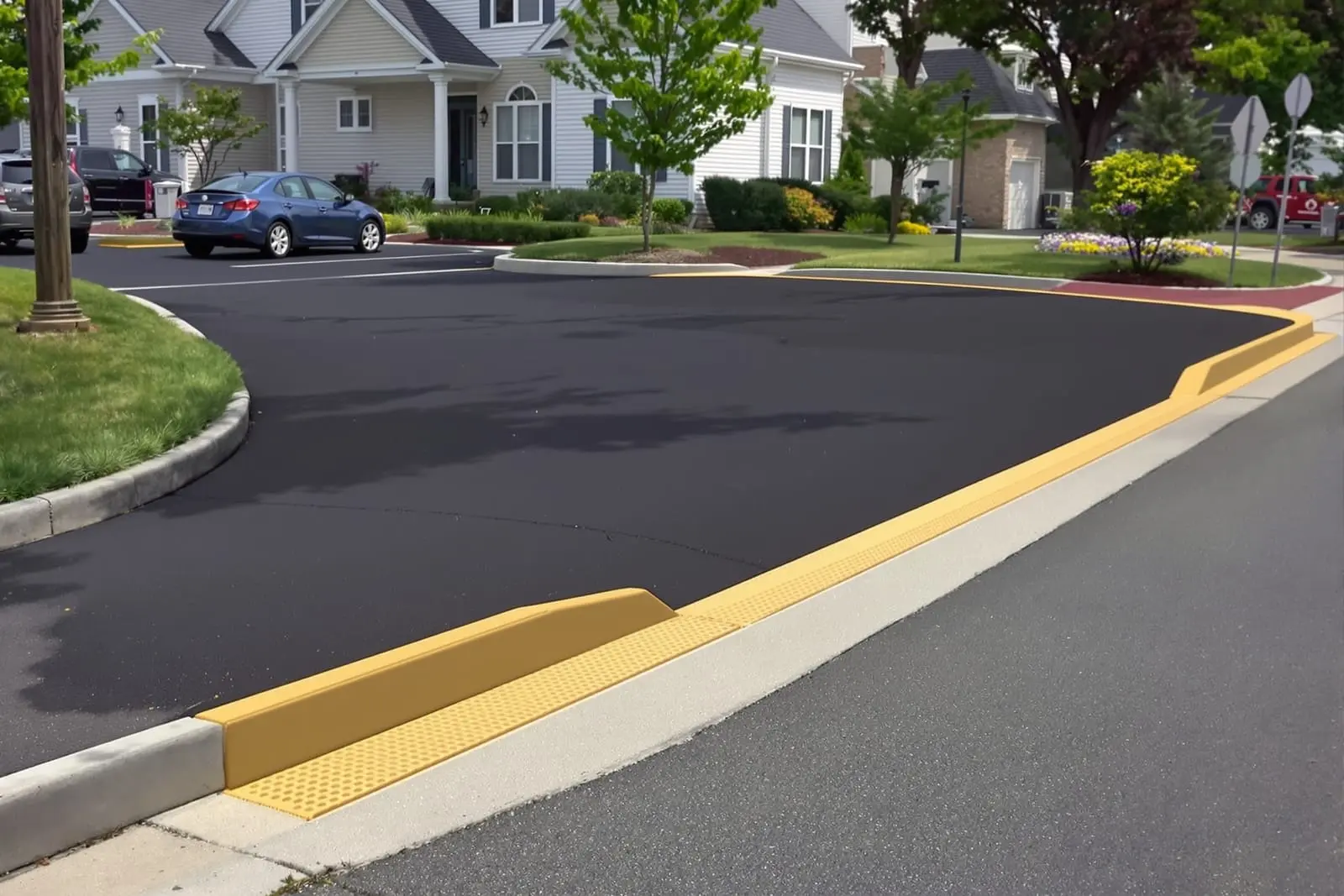
Prestige Asphalt New Orleans installs both asphalt berm curbs and cast-in-place or pre-formed concrete curbs. Asphalt curbs are formed along the edge of the pavement while the asphalt is still workable, then compacted. They are flexible and better at dealing with slight movement over time. Concrete curbs cost more but give a cleaner architectural look, which is popular for medical offices, newer townhome developments, and high-visibility retail.
We choose curb type based on how your lot is used. For example, older commercial buildings around Canal or Elysian Fields that see a lot of delivery trucks may need a heavier concrete curb that can handle tire impacts. Smaller residential parking areas in Lakeview or Gentilly often do well with asphalt berm curbs that double as both edging and a mild water guide.
Wheel stops and parking accessories
Wheel stops are typically precast concrete or recycled rubber. Concrete is cheaper and very durable but harder on cars if hit at speed. Rubber costs more per piece but is more forgiving and often easier to install on top of existing pavement.
We anchor wheel stops with rebar pins drilled into the asphalt, making sure they sit square to the parking stall stripes. This matters because crooked wheel stops are a trip hazard and a sign of poor workmanship. We also set bases for bollards, signposts, and ADA markers as part of the same visit so your traffic control and accessibility features all line up correctly.
Drainage and elevation details
Curbs and wheel stops affect drainage. On low-lying New Orleans lots, especially below street grade, we pay careful attention to where water will back up. We may leave intentional gaps in curbs at designed spill points or shape low points to guide water toward inlets. This is where local experience is critical, because the wrong curb configuration can trap water against your building or create constant puddles over your asphalt.
What Affects Cost and Longevity of Asphalt Speed Bumps and Curbs
Understanding what drives pricing helps you compare quotes fairly. Prestige Asphalt New Orleans is always happy to break down numbers so you know exactly what you are paying for.
Main cost drivers
Number and size of features: More bumps, longer curbs, or extra wheel stops obviously affect material and labor. A single speed bump at a small church may be a quick half-day project, while a full apartment complex layout with 10 speed bumps, curbing, and striping becomes a multi-day mobilization.
Existing pavement condition: If your asphalt is cracked or rutted, we may need base repair or patching before adding anything on top. Installing a bump over a failing surface is wasted money. Sometimes we recommend a patch or thin overlay first, then curbs and accessories once the surface is sound.
Material choice: Hot mix asphalt, concrete curbs, rubber wheel stops, reflective paint, and raised markers all have different price points. A typical cost decision is concrete versus rubber wheel stops or simple painted bumps versus bumps with reflective elements.
Access and phasing: In tight French Quarter or CBD lots where we have limited work windows and must phase the work after hours, labor and setup costs are higher. For suburban properties with open access, we can move faster and keep costs down.
Longevity considerations
For long life, we recommend:
• Correct bump height for your traffic type. Oversized bumps get hit hard and break down, and they often encourage drivers to steer around them, which tears up edges.
• Proper compaction and bonding. We never skip tack coat on overlays or tie-ins, and we compact with the right rollers so your bump behaves like part of the original pavement, not an add-on that peels away.
• Good drainage planning. Standing water is the number one killer of asphalt in our climate. Every bump and curb we install is checked for trap points where water could sit.
With these basics in place, asphalt speed bumps and curbs on a regularly maintained lot can last many years, needing only occasional crack sealing or repainting of stripes.
What New Orleans Property Owners Should Decide Before Calling
A little planning on your side makes our visit more efficient and helps you get exactly what you need. Before Prestige Asphalt New Orleans comes out, it helps to think through a few questions.
Where is traffic actually a problem
Notice where you have near-misses, fast traffic, or people cutting through. Is it by a side gate, near a school path, or at the back of the lot near dumpsters? Instead of requesting a generic row of bumps, mark on a sketch or aerial map where you really see issues. We can pull up a satellite image during our site visit and plan exact locations.
Who uses your lot
If you have frequent delivery trucks, ambulances, or service vehicles, we may design gentler speed tables or wider humps instead of the sharp bumps used at smaller residential lots. For senior housing or medical facilities, we also pay extra attention to trip hazards and smooth transitions for walkers and wheelchairs.
How often can the lot be closed
We need short closures while we install and stripe. For 24-hour operations like hotels or some clinics, we can phase work so part of the lot stays open while the other section cures. Having an idea of your slowest days and hours helps us schedule with minimal disruption.
Local permitting and HOA rules
On private property, speed bumps and curbs rarely require city permits, but HOAs and property management companies often have their own standards and color rules. If you are part of an association in neighborhoods like Algiers or New Orleans East, check your guidelines first so we can match approved colors and layouts.
Once you have a rough idea of needs and constraints, we can handle the technical side: measuring slopes, selecting materials, planning drainage, and giving you a clear written proposal. Our aim is to provide asphalt speed bumps, curbs, and accessories that fit your New Orleans property, solve real safety issues, and stand up to the climate for years.
“
Professional speed bumps, curbs, and asphalt accessories, done right the first time, quality materials, honest pricing, and results that last.
Prestige Asphalt New Orleans
Speed Bumps, Curbs, and Asphalt Accessories Across Our Service Area