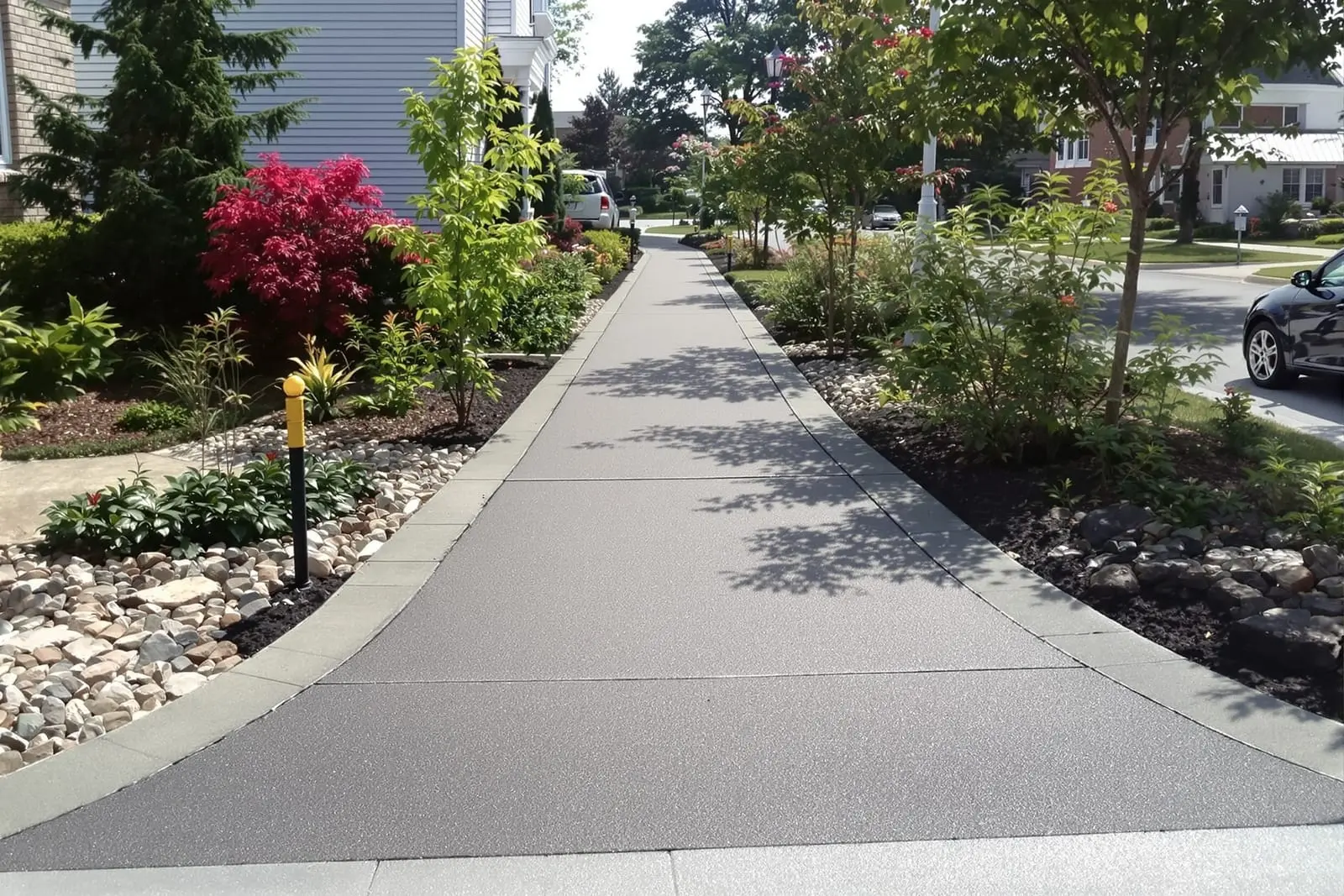
Connect people and spaces with durable asphalt sidewalks and trails in New Orleans, LA. We build smooth, accessible paths for parks, schools, campuses, and commercial sites that are comfortable for walking, jogging, and biking. Our team shapes the route, installs a stable base, and paves asphalt paths that drain well and stand up to daily foot and light vehicle traffic.
Prestige Asphalt New Orleans provides professional asphalt sidewalks throughout New Orleans, LA and the surrounding area. Our licensed, insured crew delivers safe, clean, on-time work with a free estimate before anything begins. Call (504) 386-5171 or request your free quote.
Asphalt Sidewalks and Pathways Designed for New Orleans
Asphalt sidewalks, walking paths, and multi‑use trails in New Orleans have to do more than just look clean and smooth. Our humidity, frequent rain, and occasional flooding put constant stress on paved surfaces. Prestige Asphalt New Orleans designs every asphalt sidewalk and pathway to handle this climate, from drainage planning to the exact mix of asphalt used.
We start by asking how the space will be used. A residential garden path has different needs than a school walkway or a park trail that sees bikes, strollers, and maintenance vehicles. We look at foot traffic levels, expected weight loads, shade or tree coverage, and any known drainage issues on your property. This allows us to recommend the right pavement thickness, base depth, and edge support so your new asphalt sidewalk stays stable and safe for years, not just the first season.
Because sidewalks and trails in this region often connect to city streets or existing concrete, we also evaluate how those transitions should be built. Our crews pay close attention to joint details to reduce tripping hazards and prevent water from seeping under the new pavement at connection points.
How We Build Durable Asphalt Sidewalks and Trails
Quality asphalt sidewalks and pathways start under the surface. Prestige Asphalt New Orleans begins every project with layout and excavation, removing grass, organic soil, and any unstable material. In New Orleans this often includes soft clay pockets and old fill. We dig deep enough to reach firm ground, typically 4 to 8 inches below finished grade for pedestrian areas, sometimes deeper for multi‑use trails.
Next we install a compacted aggregate base, usually limestone or crushed concrete that compacts tightly. The thickness varies based on soil conditions and traffic but is rarely less than 4 inches for sidewalks and can be 8 inches or more for shared‑use paths. Our crews compact the base in thin lifts using plate compactors and rollers to avoid future settling and depressions.
After the base is set, we place and grade the hot mix asphalt. For most sidewalks we use a fine aggregate surface mix that creates a smoother, more comfortable walking surface and better appearance. The asphalt is laid to a consistent thickness, then compacted with a roller and hand tampers along edges and around structures. We shape the surface with a slight cross slope, usually around 2 percent, so water sheds off instead of ponding.
When necessary we install root barriers or extra base reinforcement near trees to prevent future buckling. We also address any transitions to driveways, parking lots, or existing paths by tapering the asphalt or installing small aprons so users do not encounter abrupt height changes.
Design Options: Width, Layout, and Accessibility
Sidewalks and trails are functional, but they also influence how people move through a property. Prestige Asphalt New Orleans helps you choose widths, curves, and details that match how the space will actually be used. Residential walkways are often 3 to 4 feet wide, while commercial or public sidewalks in New Orleans work better at 5 to 8 feet to let people pass comfortably and accommodate wheelchairs or carts.
Curved asphalt pathways can soften the look of a yard or park and can be laid to avoid large trees or utilities. We plan curves carefully to maintain positive drainage and to prevent tight turns that are uncomfortable for cyclists or mobility devices. In multi‑family and commercial settings we often design looped walking tracks or connections between buildings, parking, and amenities so users are guided naturally where they need to go.
Accessibility is critical. We follow ADA guidelines for slopes, cross slopes, and landing areas so users with limited mobility can travel safely. That includes planning gentle grades, proper width, and clear space at building entrances, curb ramps, and crossings. At drive entries and intersections we can add high contrast markings or texturing so people see where sidewalks intersect traffic areas.
Edge details are another design element. Asphalt sidewalks can be finished with clean straight edges, decorative borders using concrete or brick, or flush transitions to turf or landscaping. We discuss maintenance with you as well, because some clients prefer defined edges for easier mowing while others want a seamless look into planting beds.
Local Challenges: Heat, Rain, and Tree Roots
New Orleans weather and soil cause specific problems for sidewalks and trails. Extreme heat can soften poorly mixed asphalt, frequent rain can wash out weak base material, and tree roots can lift pavement in just a few seasons. Prestige Asphalt New Orleans addresses these issues in the design and build phase so you are not constantly repairing the same spots.
We use asphalt mixes appropriate for our temperature range so the surface stays firm during hot summers. Proper compaction during installation is just as important, because loosely compacted asphalt deforms more easily and holds water. Our crews monitor material temperature and compaction density in the field, not just by eye.
Drainage is engineered into every project. Even a slight low spot on a sidewalk in New Orleans can turn into a puddle that attracts algae growth and becomes slippery. We set grades carefully, add subsurface drainage where needed, and sometimes incorporate shallow swales beside the path so water has a place to go instead of sitting on the walking surface.
Tree roots are a major source of calls we receive from homeowners and property managers. Rather than simply paving over root zones, we can adjust alignments to stay clear of primary roots, install root barriers, or thicken and reinforce the base in high‑risk areas. If you already have a heaved or cracked path, we evaluate whether selective root pruning, re‑routing, or base reconstruction will provide the best long term solution without harming valuable trees.
What Affects the Cost of Asphalt Sidewalks and Trails
Customers in New Orleans often ask why two similar looking sidewalks can have different prices. The cost of asphalt sidewalks and pathways is driven by more than just square footage. Prestige Asphalt New Orleans explains these factors clearly so you understand where your budget is going.
Access and layout are big influences. Straight runs in open yards are faster and require less hand work than tight, winding paths around buildings or landscaping. Limited access that prevents the use of standard paving equipment can increase labor time and may require smaller machines or more manual placement.
Soil conditions under the path matter greatly. If we find soft or saturated ground, we may need deeper excavation, additional aggregate, or geotextile fabric to create a stable base. This protects you from future settlement and trip hazards but does add to the upfront cost. Similarly, if drainage improvements such as swales, small catch basins, or culverts are needed, those are priced separately.
Thickness and use also drive pricing. A light duty residential sidewalk can use a thinner structure than a mixed‑use trail designed to support maintenance vehicles or golf carts. More asphalt and thicker base material increase strength but also material quantity. Edge restraints, decorative borders, or transitions to concrete or brick will also impact the total.
We provide itemized proposals that separate base work, asphalt placement, drainage features, and any removal of existing surfaces. That way you can see exactly what we are recommending and where you might adjust the scope without sacrificing durability or safety.
Common Issues and How We Repair Existing Asphalt Sidewalks
Many jobs we handle in New Orleans involve repairing or upgrading existing asphalt sidewalks and walking trails rather than starting new. Prestige Asphalt New Orleans evaluates each issue to decide whether targeted repair, resurfacing, or full replacement is the right fix.
For isolated cracks that are not caused by ongoing movement or major roots, we clean and fill them with hot rubberized crack sealant to keep water out of the base. Small birdbaths or low spots can sometimes be corrected with surface patching, where we mill or cut out the affected area, rebuild the base if needed, and place new asphalt flush with the surrounding surface.
When the surface has widespread raveling, unevenness, or multiple patches but the base is mostly stable, an overlay can be effective. We may mill the top layer to improve bonding and adjust elevations around doors and curbs, then apply a new layer of asphalt to create a smooth, uniform walkway. Overlays are particularly useful for older park trails that have become rough but are structurally sound.
If there is extensive base failure, chronic standing water, or severe heaving from roots, we recommend full depth reconstruction of the affected sections. That means removing the existing pavement and compromised base, correcting drainage and root conflicts, placing new aggregate base, and then repaving. Although more involved, this approach prevents repeated patching that never fully solves the underlying problem.
For property owners planning phased improvements, we can prioritize high risk areas such as entrances, steps, and high traffic segments first, then schedule lower priority sections in later stages to match your budget.
Working With Prestige Asphalt New Orleans
Having new asphalt sidewalks, pathways, or trails installed should be organized and predictable. Prestige Asphalt New Orleans outlines every step before work begins, starting with a site visit. We take measurements, check drainage patterns, look at existing pavements, and discuss how pedestrians, cyclists, or maintenance equipment will use the space.
You receive a written proposal that covers alignment, widths, thicknesses, base preparation, and any connection details to existing surfaces. If you are working within a homeowners association or commercial property guidelines, we can coordinate on appearance standards and access scheduling.
During construction we control access to work areas so residents, students, or customers stay safe and informed. Most standard sidewalk and pathway projects are completed in stages over a few days, which typically include demolition and excavation, base installation, and asphalt paving. In many cases, light foot traffic can return within 24 hours of paving, though we advise specific timelines based on temperature and project type.
After completion we walk the site with you, identify any small touch ups, and review maintenance recommendations. Routine sweeping, debris removal, and timely crack sealing extend the life of your investment significantly. If you are planning additional phases, such as future trail extensions or lighting, we can set grades and alignments now so those additions tie in smoothly later.
To discuss a new asphalt sidewalk, campus walkway, or neighborhood trail in New Orleans or the surrounding area, contact Prestige Asphalt New Orleans for a site assessment and detailed plan tailored to your property.
“
Professional asphalt pathways, sidewalks, and trails, done right the first time, quality materials, honest pricing, and results that last.
Prestige Asphalt New Orleans
Asphalt Pathways, Sidewalks, and Trails Across Our Service Area