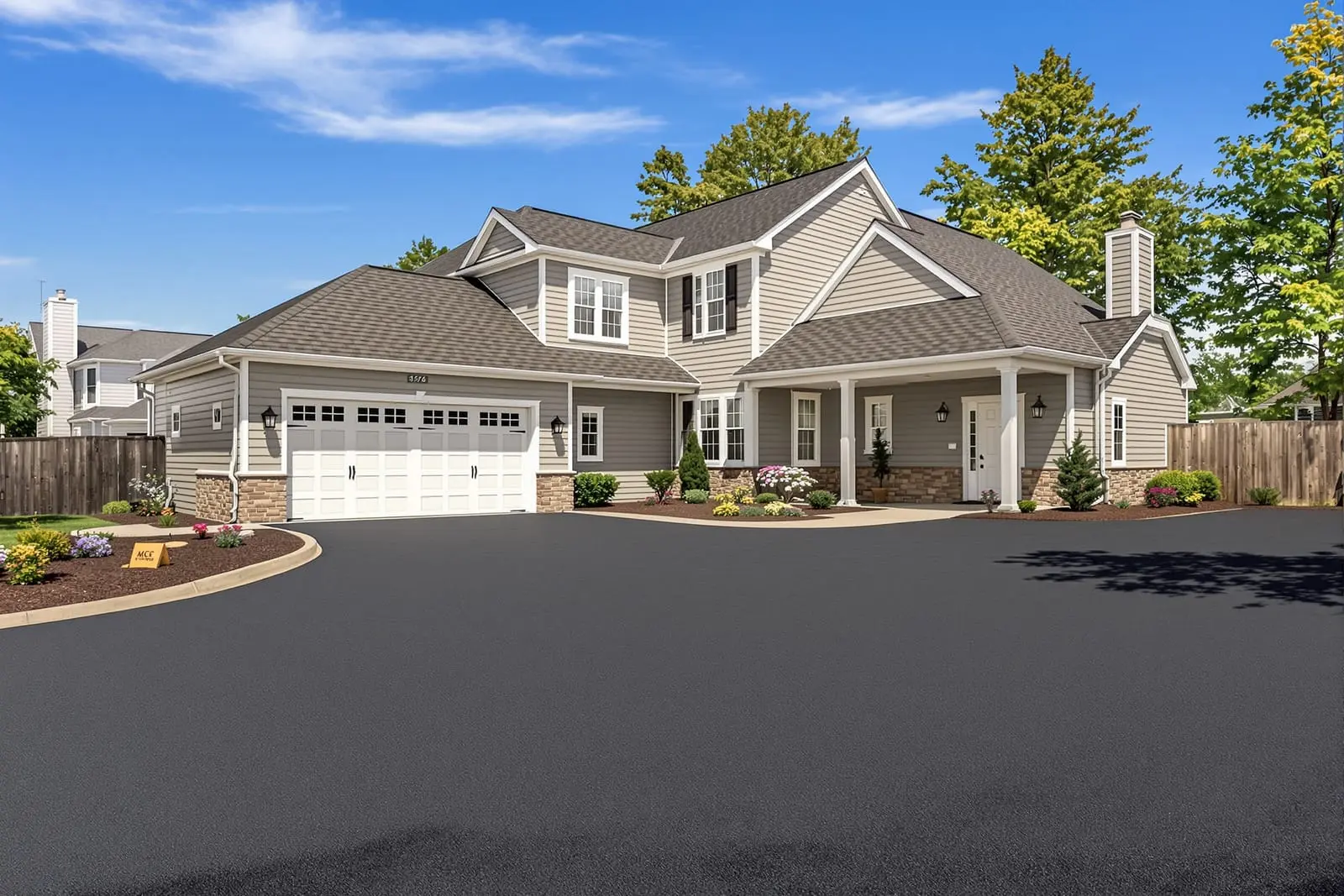
Turn rough gravel areas into professional hard surfaces with commercial gravel to asphalt conversions in New Orleans, LA. We regrade and compact existing stone, beef up weak spots, and pave smooth asphalt over parking lots and drive lanes that used to be gravel. The result is less dust, better drainage, and a cleaner appearance for customers and employees.
Prestige Asphalt New Orleans provides professional commercial gravel to asphalt throughout New Orleans, LA and the surrounding area. Our licensed, insured crew delivers safe, clean, on-time work with a free estimate before anything begins. Call (504) 386-5171 or request your free quote.
Turn Your Gravel Lot Into a Professional Asphalt Surface
If your commercial property in New Orleans is still using gravel for parking or drive lanes, you are probably dealing with dust, standing water, and constant ruts. Prestige Asphalt New Orleans specializes in commercial gravel to asphalt conversions that transform loose rock areas into smooth, durable asphalt surfaces that look professional and are easier to maintain.
We handle small business parking lots, large commercial centers, churches, industrial yards, and mixed-use properties across Orleans Parish and nearby parishes. Our crews are used to working in tight urban sites, older properties in need of upgrades, and active businesses that must stay open during construction.
Converting gravel to asphalt is not just a matter of paving over what is already there. To get an asphalt surface that lasts in the New Orleans climate, we focus on correcting drainage, stabilizing the base under your existing gravel, and choosing a pavement design that fits the traffic and moisture conditions on your site. Our goal is a clean, even asphalt surface that does not rut after the first heavy rain, and that reflects well on your business.
Site Evaluation and Planning for New Orleans Conditions
Every commercial gravel to asphalt project with Prestige Asphalt New Orleans starts with a detailed site evaluation. New Orleans has soft soils, high groundwater, and frequent heavy rain. Those factors affect how we design your asphalt section and how we handle the existing gravel.
During your on-site assessment, we:
• Walk the full area to locate low spots, ponding, existing ruts, and any areas that stay mushy after rain.
• Look at traffic patterns, including delivery truck routes, dumpster access, and any turning movements that cause rutting in the gravel.
• Check existing slopes toward catch basins, ditches, or street gutters so we can maintain or improve drainage.
• Identify underground utilities, edges of slabs, and building entrances that set the final asphalt elevation.
For many New Orleans properties, the biggest concern is drainage. Flat lots and high water tables mean that water has nowhere to go if the lot is not properly graded. We design your gravel to asphalt conversion to create positive slope, even if it is only a slight fall, so water moves toward drains or the street instead of sitting under your new asphalt. When needed, we recommend additional catch basins, reworking of existing ditches, or minor concrete work to eliminate chronic ponding areas.
We also discuss timing and phasing with you at this stage. For active businesses, we can break work into sections so that part of the parking stays open, schedule work during off hours, or coordinate with your tenants so disruption is minimized.
How Commercial Gravel-to-Asphalt Conversions Are Built
Once the plan is in place, Prestige Asphalt New Orleans follows a proven construction sequence tailored to gravel to asphalt conversions:
1. Preparation of the gravel area
We begin by shaping the existing gravel with grading equipment. High spots are cut down and low areas are filled to start building the correct slope. Soft or pumping areas in the gravel are excavated so that unstable material can be removed. Trash, vegetation, and any unsuitable fill are taken out of the work area.
2. Subgrade correction
In New Orleans, the soil under the gravel often contains clay or organic material that holds water. Where the subgrade is weak, we may undercut several inches to a foot or more, then replace that soil with crushed limestone or other suitable aggregate. In some locations we add a geotextile stabilization fabric between the native soil and the aggregate to keep the rock from sinking into soft ground over time.
3. Building the aggregate base
For most commercial gravel to asphalt projects, we construct a compacted aggregate base over your existing or improved gravel. That base is typically a graded limestone or similar crushed stone, placed in layers and compacted with vibratory rollers to reach the proper density. The thickness depends on your traffic and soil conditions. A light-traffic office lot might receive 4 inches of compacted base, while an area that supports frequent delivery trucks may need 6 to 8 inches.
4. Fine grading and proof rolling
After the base is built, we fine grade it to achieve a consistent, smooth surface and correct slopes. Then we perform a proof roll, which means we drive a fully loaded truck over the lot and watch for any deflection or pumping. Soft areas that show up during proof rolling are cut out and repaired before we pave. This step is crucial for long-term performance in our local soils.
5. Asphalt installation
The asphalt is placed with a paving machine so the lift is uniform in thickness. For most commercial lots we use a binder course (a stronger lower layer) and a surface course (a smoother top layer) to balance strength and appearance. Each layer is compacted with steel drum and pneumatic rollers to lock the asphalt together.
6. Transitions and detailing
We finish by tying the new asphalt into existing streets, driveways, sidewalks, and building entrances. We sawcut at concrete edges where needed and adjust utility structures to final grade. Good detailing at these transitions prevents trip hazards and reduces water infiltration at joints.
Material Choices, Pavement Thickness, and Cost Factors
The right design for a commercial gravel to asphalt conversion in New Orleans depends on traffic, soil, and drainage. Prestige Asphalt New Orleans walks you through options so we match the pavement to the actual use of your site.
Typical design choices include:
• Pavement thickness: Light-use employee parking might use 2 to 2.5 inches of asphalt over 4 inches of base. Areas that see box trucks, garbage trucks, or delivery vehicles can require 3 to 4 inches of total asphalt over 6 to 8 inches of base. Heavier designs cost more up front but resist rutting and fatigue cracking much better.
• Single lift vs multiple lifts: For very small areas or low-traffic drives, a single lift of asphalt may be appropriate. For most commercial lots, two lifts (binder and surface) provide better compaction and performance, especially when subjected to New Orleans heat.
• Mix type: We select Louisiana DOT or industry-recognized mixes that handle high temperatures and daily rainfall. Coarser mixes are used for strength in the lower lift, and a finer mix is used on top to deliver a smoother finish that stripes well.
Key cost drivers for commercial gravel to asphalt projects include:
• Existing gravel condition and thickness. Thick, well-drained gravel can often be reused and upgraded to a base, which saves money. Thin or contaminated gravel might need partial removal or more imported base rock.
• Site access and layout. Tight urban lots, overhead restrictions, or long hauls through narrow alleys can affect equipment selection and crew time.
• Drainage improvements. Installing or adjusting catch basins, adding trench drains, or building swales to move water can add cost but often prevents far more expensive damage later.
• Phasing requirements. If we must pave in multiple small phases to keep sections of the lot open, mobilization and labor costs are higher than on a single-phase project.
We provide written proposals that clearly list the planned asphalt thickness, base thickness, and scope of any subgrade or drainage corrections so you know what you are paying for and can compare estimates on an apples-to-apples basis.
Handling Common Problems in New Orleans Gravel Lots
Gravel lots in the New Orleans area commonly suffer from issues that must be corrected before asphalt goes down. Prestige Asphalt New Orleans has extensive experience diagnosing and addressing these conditions so they do not reappear through your new pavement.
Chronic ponding: Standing water in gravel is a warning sign. It usually means the subgrade is low or compacted unevenly, or the lot is too flat. We correct this by reshaping the base to direct water toward drains or the street, sometimes by raising the lot slightly away from building entrances and tying back in at thresholds.
Soft spots and pumping: Areas that move under vehicle loads are usually caused by weak soils or organic material trapped beneath the gravel. We dig out these zones to firm material, then rebuild with stone and, if needed, stabilization fabric. Skipping this step will almost always lead to early rutting in your new asphalt surface.
Dust and loose rock migration: Many commercial properties near busy New Orleans streets fight dust clouds and gravel washing into storm drains. When we convert these to asphalt, we pay attention to edge containment by using proper tie-ins, curbs, or concrete bands where beneficial. This keeps the edges stable and reduces maintenance.
Tree roots and nearby structures: Older properties often have large trees or shallow foundations near the lot. Roots can eventually heave asphalt. Where trees must remain, we can adjust the pavement limits, use root barriers where practical, and detail transitions so future root growth has less impact on the driving surface.
Because of the local climate, we also take care with the timing of paving. We avoid placing asphalt on a saturated base whenever possible, and we monitor weather closely to reduce the risk of sudden heavy showers affecting fresh work. Proper scheduling and surface protection during curing improves the final density and durability of your lot.
What to Expect When You Hire Prestige Asphalt New Orleans
A successful commercial gravel to asphalt conversion is as much about communication and planning as it is about materials. Prestige Asphalt New Orleans provides a structured process so you know what to expect from first visit to final striping.
Before work begins, we review a layout with you that shows which areas will be worked on each day, traffic flow during construction, and any temporary parking arrangements. If your business has peak hours, deliveries, or special events, we schedule around them whenever possible.
During construction, you will have a single point of contact on our team who can make on-site decisions and keep you updated on progress. If we uncover unforeseen conditions, such as hidden soft spots or old buried debris, we explain what we found, present options, and document any approved changes before proceeding.
After paving, we typically recommend keeping vehicles off the new asphalt for at least 24 hours, sometimes longer for heavy trucks, depending on temperature and mix. Once the surface has cooled and hardened adequately, we return to stripe parking spaces, fire lanes, and accessible parking in accordance with current codes.
We also provide guidance on early maintenance. That may include limiting sharp turning movements from heavy vehicles in tight areas, addressing any fuel or oil spills promptly, and considering a sealcoat schedule in future years to extend the life of your investment.
By working with a local contractor who understands New Orleans soils, drainage, and weather patterns, you reduce the risk of costly mistakes. Prestige Asphalt New Orleans takes pride in converting loose gravel areas into clean, durable asphalt lots that function well in our climate and help your property present a more professional image to customers, tenants, and employees.
“
Professional commercial gravel-to-asphalt conversions, done right the first time, quality materials, honest pricing, and results that last.
Prestige Asphalt New Orleans
Commercial Gravel-to-Asphalt Conversions Across Our Service Area